What is a fully threaded hex bolt to DIN 933?
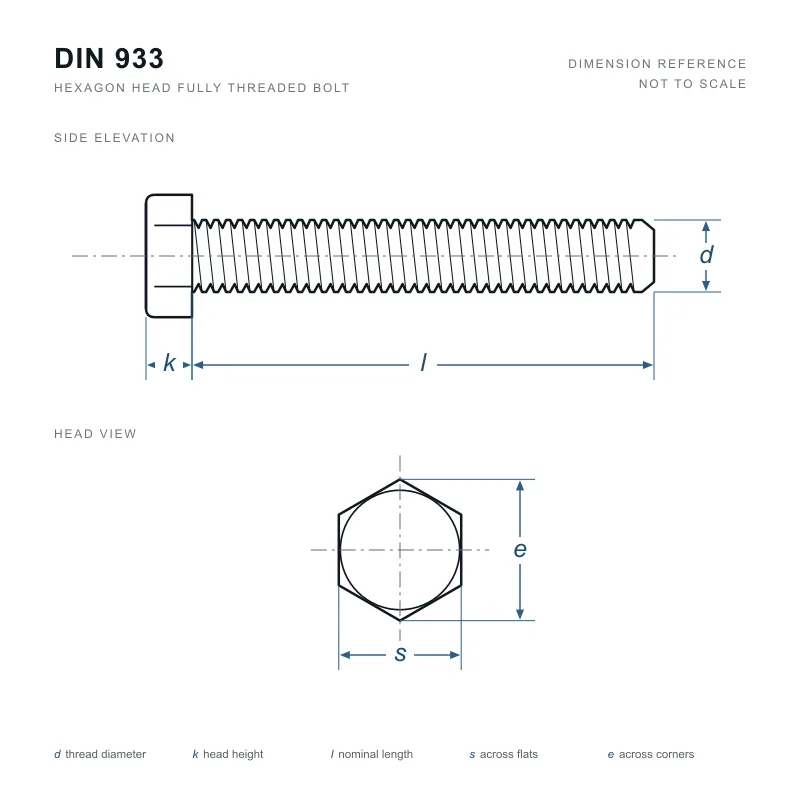
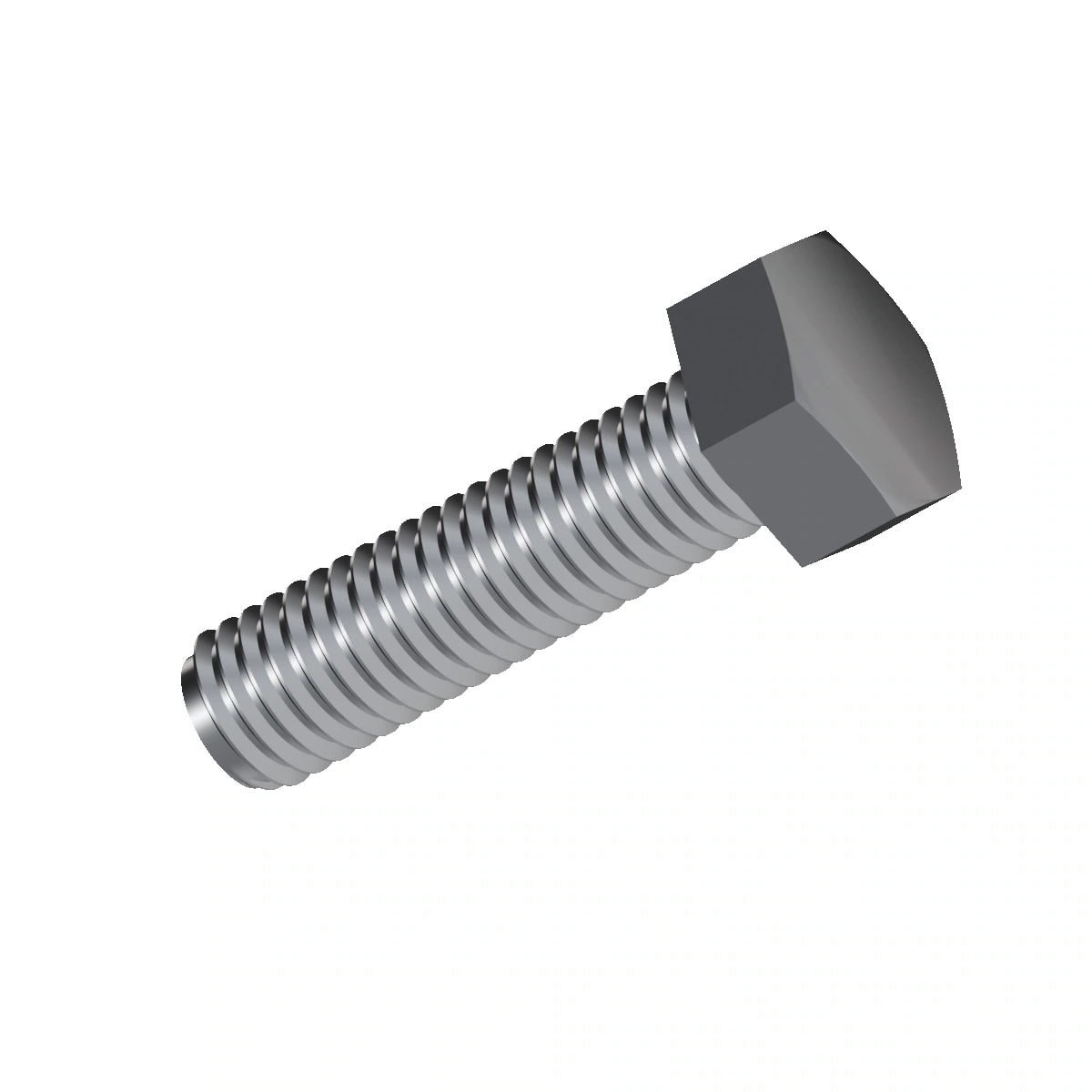
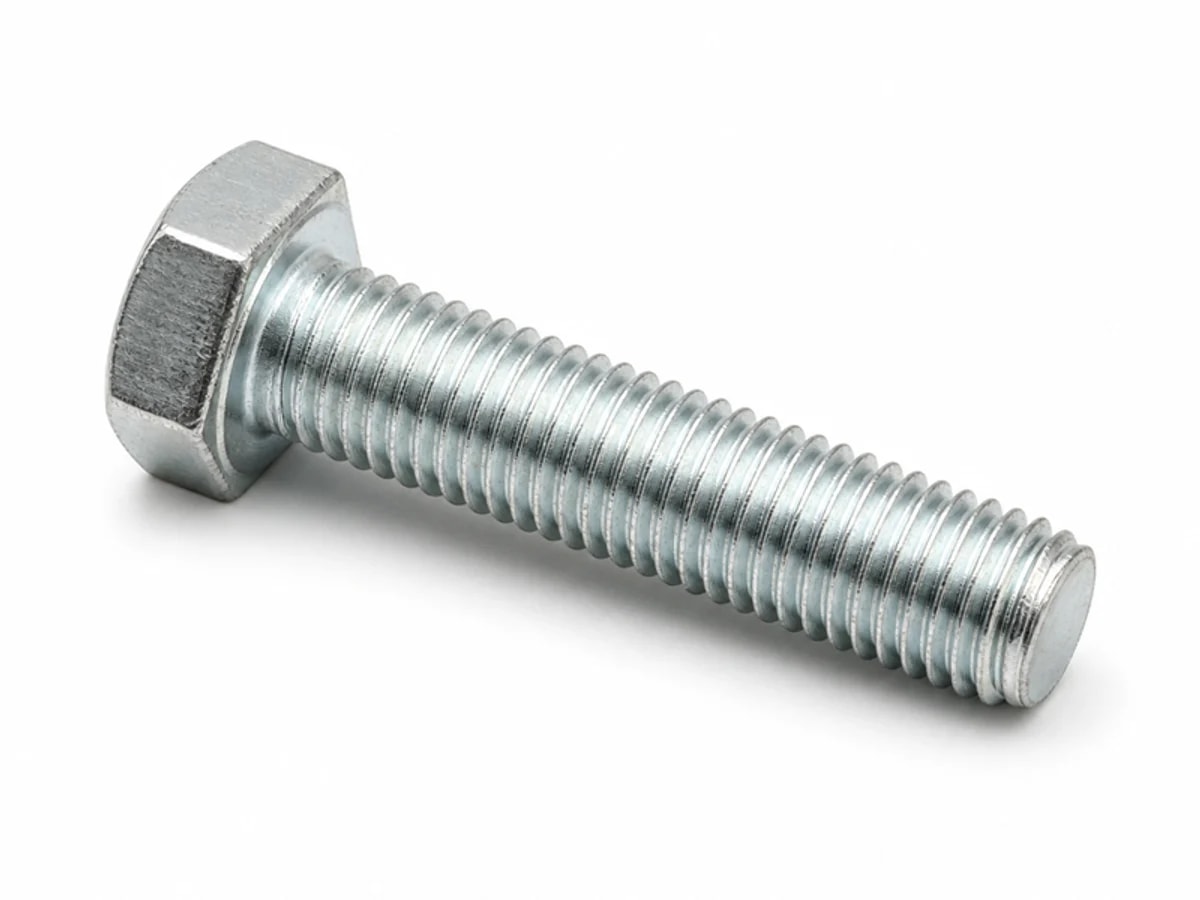
A fully threaded hex bolt to DIN 933 is a metric hexagon head bolt with a thread that runs the full length of the shank, up to the underside of the head. The standard specifies dimensions, tolerances, and mechanical properties for bolts with threads from M1.6 to M52. It is commonly used in general machinery assembly, steel structures, equipment mounting, and maintenance applications where full thread engagement is needed.
How to specify a DIN 933 bolt correctly
When specifying a DIN 933 bolt, you need to define the following parameters clearly. Missing any of these can lead to incorrect parts or delays.
- Nominal diameter (d): e.g., M6, M8, M10. The product data confirms availability in M6 and M8; other sizes may be available on request.
- Thread pitch: Standard coarse pitch is assumed unless fine pitch is specified (e.g., M8 x 1.25 is standard; M8 x 1 is fine).
- Nominal length (l): Measured from under the head to the end of the bolt. For fully threaded bolts, the thread runs the entire length.
- Material and property class: See the material selection section below.
- Surface finish/coating: e.g., plain, zinc plated, hot-dip galvanized, or stainless steel passivated. The finish affects corrosion resistance and appearance.
- Standard reference: Always state “DIN 933” and the revision year if critical (e.g., DIN 933-1987). The current equivalent ISO standard is ISO 4017, but DIN 933 is still widely used in industry.
Material selection for DIN 933 bolts
The choice of material and property class depends on strength requirements, environmental conditions, and cost. The product data lists carbon steel, stainless steel, and alloy steel as available materials. Below is a comparison of typical options.
| Material | Common Property Classes | Typical Applications | Corrosion Resistance |
|---|---|---|---|
| Carbon Steel | 4.6, 4.8, 5.6, 5.8, 8.8, 10.9, 12.9 | General structural connections, machinery where high strength is needed (8.8 and above) | Low; requires coating (zinc, galvanized) for outdoor use |
| Stainless Steel | A2-70, A4-70, A2-80, A4-80 (ISO 3506) | Food equipment, chemical plants, marine environments, architectural | High; A4 (316) offers better resistance to chlorides than A2 (304) |
| Alloy Steel | 10.9, 12.9 (often quenched and tempered) | High-stress applications, engine components, heavy machinery | Low; usually coated or plated |
Important: The property class must be verified against the applicable standard and drawing. For stainless steel, the grade (e.g., A2 or A4) and strength class (e.g., 70 or 80) should be specified. The product data does not list specific property classes; confirm availability with the supplier.
Dimensional considerations and tolerances
DIN 933 defines dimensions such as width across flats (s), head height (k), and thread lengths. For fully threaded bolts, the thread length equals the nominal length minus the transition zone under the head. Tolerances are per the standard; for precise fits, refer to the standard or the technical data sheet (TDS) available for this product.
Quotation checklist for DIN 933 bolts
When requesting a quotation, provide the following information to ensure accurate pricing and delivery. This checklist is based on the product data and typical industrial practice.
- Standard and type: DIN 933 fully threaded hex bolt.
- Dimensions: Diameter x length (e.g., M8 x 30).
- Material and property class: e.g., Carbon Steel 8.8, Stainless Steel A2-70.
- Finish: e.g., zinc plated, plain, hot-dip galvanized.
- Quantity: Note the minimum order quantity (MOQ) of 200–1000 pieces depending on the item.
- Lead time: Standard lead time is 7–15 days; confirm if expedited delivery is needed.
- Certification: Specify if material certificates (e.g., EN 10204 3.1) or test reports are required.
- Packaging: Any special packaging requirements.
Always refer to the product’s technical data sheet (TDS) for exact specifications and confirm that the bolt meets your application’s requirements.
Common pitfalls in selection
- Confusing DIN 933 with DIN 931: DIN 931 is partially threaded; DIN 933 is fully threaded. Ensure you select the correct standard for your joint design.
- Ignoring thread engagement: For fully threaded bolts, the nut must be able to engage sufficient threads. Check that the bolt length provides adequate protrusion.
- Over-specifying strength: Higher property classes (e.g., 12.9) may be more brittle and susceptible to hydrogen embrittlement if not properly processed. Select the class based on actual loads.
- Corrosion mismatch: Pairing stainless steel bolts with carbon steel nuts can lead to galvanic corrosion. Use compatible materials.
Next steps
Review the technical data sheet for the Fully Threaded Hex Bolt DIN 933 to confirm dimensions and material options. If you have a specific requirement, prepare your specification using the checklist above and request a quotation.