What to confirm before ordering threaded rod
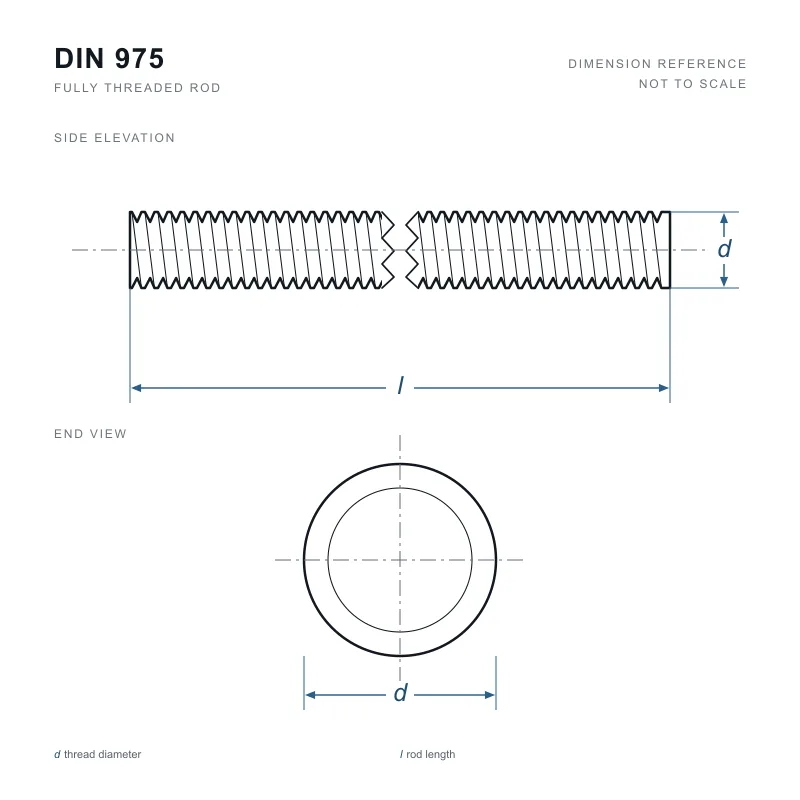
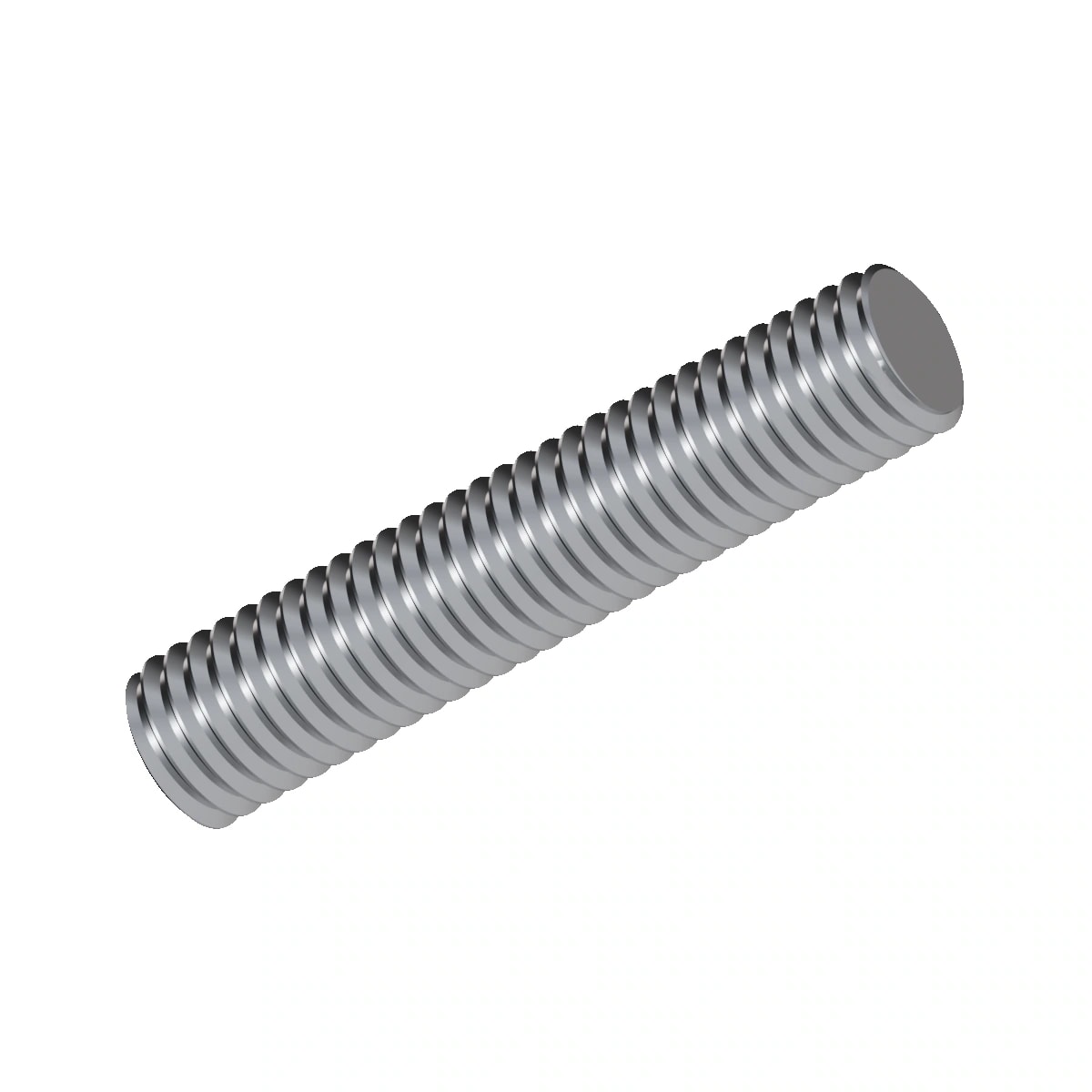
Before placing an order, verify the dimensional, material, and finish requirements against your application. Missing one detail can lead to on-site rework, delayed installation, or premature failure. The checks below focus on DIN 975 threaded rod, the most common fully threaded metric rod used in industrial support systems.
1. Confirm the diameter and thread pitch
DIN 975 threaded rod is supplied in metric coarse pitch as standard (e.g., M10 × 1.5, M16 × 2.0). If your nuts or threaded inserts require a fine pitch, you must specify this explicitly. Always state the nominal diameter and pitch together on the enquiry.
- Check: Measure an existing rod or mating nut with a thread gauge.
- Common mistake: Assuming M12 is always 1.75 mm pitch. Some equipment uses M12 × 1.25 fine thread.
2. Specify the material grade and its implications
Threaded rod is available in carbon steel grades 4.8 and 8.8, and stainless steel grades A2-70 and A4-80. The grade determines tensile strength and suitability for the environment.
| Grade | Typical use | Key limitation |
|---|---|---|
| 4.8 | Low-stress static applications, general hanging | Not for structural joints or dynamic loads |
| 8.8 | Medium to high strength, machine frames | Requires corrosion protection if used outdoors |
| A2-70 | Indoor mildly corrosive environments | Not resistant to chlorides (e.g., coastal or pool areas) |
| A4-80 | Chemical and marine exposure | Higher cost; verify if A2-70 is sufficient |
Action: Match the grade to your load calculation and corrosion risk. If in doubt, request the manufacturer’s mechanical property certificate.
3. Choose the correct surface finish
Finish protects the rod and affects torque-tension behaviour. Common options for carbon steel are zinc plated (electro-galvanised) and hot dip galvanised (HDG). Stainless steel is typically supplied plain or passivated.
- Zinc plated: Indoor or sheltered outdoor use. Thin coating, not for aggressive environments.
- Hot dip galvanised: Thicker coating for outdoor structural applications. May require oversize nuts to accommodate coating thickness.
- Plain/Passivated: For stainless steel rods; passivation improves corrosion resistance by removing free iron.
Check: Confirm compatibility with mating fasteners. Mixing HDG rod with zinc-plated nuts can lead to galling or uneven corrosion.
4. Verify the required length and cut tolerances
DIN 975 rods are typically supplied in 1 m or 3 m lengths. If you need custom lengths, state the exact overall length and acceptable tolerance. Standard saw-cut tolerance is usually ±2 mm, but tighter tolerances may require additional machining.
- For adjustment applications: Allow extra length for threading into base plates or levelling feet.
- For stud connections: Ensure the rod length accounts for nut thickness and thread engagement on both sides.
5. Check the applicable standard and any supplementary requirements
DIN 975 covers dimensions, material, and marking. However, your project may reference additional standards (e.g., ISO 898-1 for mechanical properties of carbon steel fasteners). If a specific test report or traceability is needed, request it at the ordering stage.
- Marking: DIN 975 requires the manufacturer’s mark and grade symbol on the rod or label. Confirm this is acceptable for your quality audit.
- Certificates: A 2.1 or 3.1 certificate per EN 10204 may be required for pressure vessel or structural applications. State this clearly.
6. Confirm the minimum order quantity and packaging
Standard minimum order quantities (MOQ) are 50–100 pieces per size. For smaller quantities, check availability or expect a surcharge. Also specify if rods must be bundled, boxed, or individually tagged to prevent damage in transit.
Next step
Compile the confirmed diameter, pitch, grade, finish, length, and any certification needs into a single line-item enquiry. This reduces back-and-forth and helps the supplier quote accurately. Review the standard DIN 975 threaded rod range to match your requirements.